

The Agreement between the European Union and the United Kingdom in respect of Gibraltar, published at the end of February, establishes a specific regime concerning customs, indirect taxation and the movement of goods between Gibraltar, and the customs territory of the Union, that is expected to be applicable as of 10 April.
Gibraltar is a small territory located at the southern tip of the Iberian Peninsula, bordering Spain. Although it is geographically attached to Spain, Gibraltar is a British Overseas Territory under the sovereignty of the United Kingdom. It has its own government and a high degree of self-governance, while the UK is responsible for defense and foreign affairs. Gibraltar is not part of the EU, or the United Kingdom, nor is it an independent country.
Its status has been the subject of a long-standing dispute between Spain and the UK, but in practice it functions as a separate jurisdiction with close economic and social links to both.
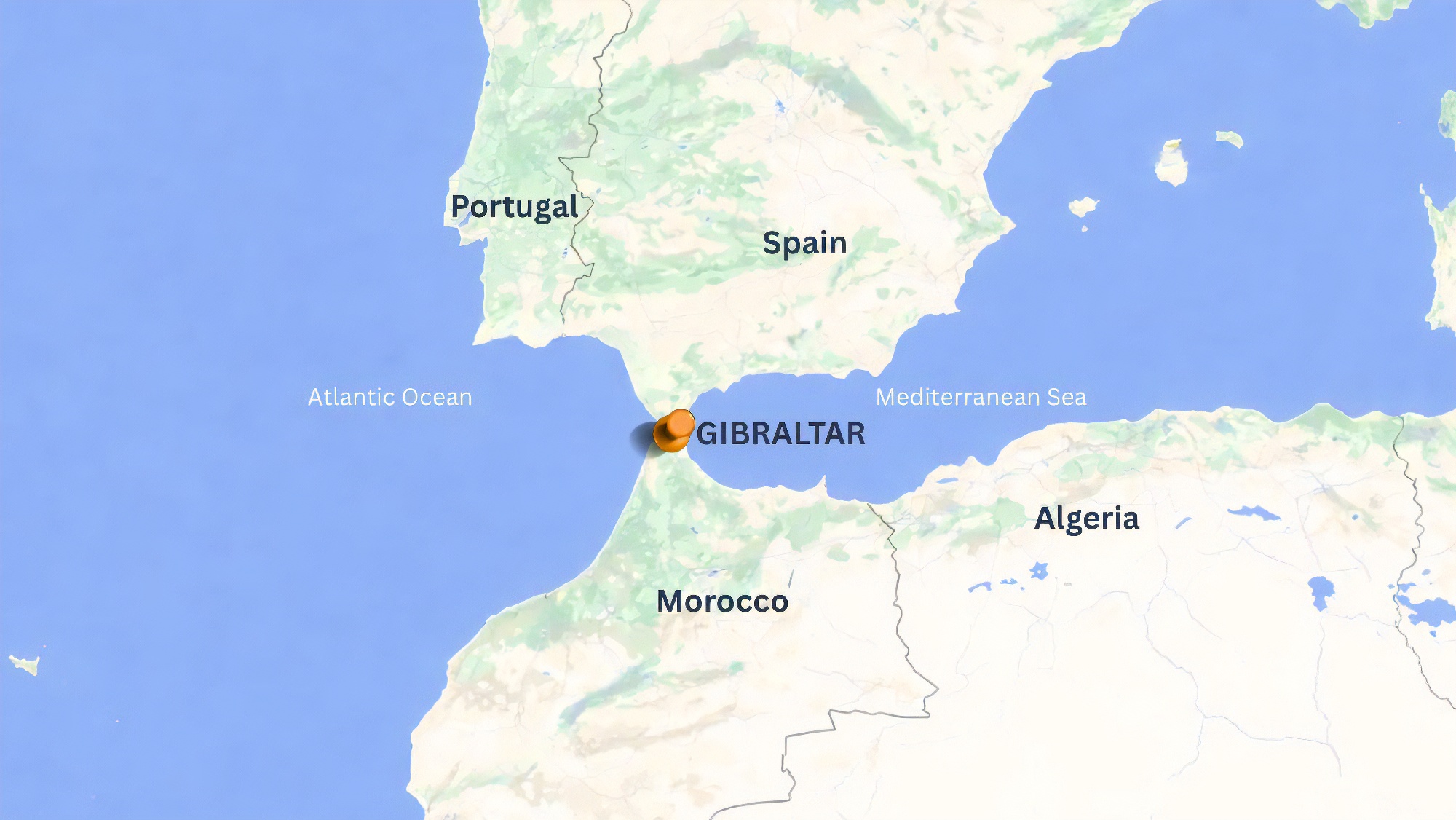 Gibraltar on the map (see Google Maps for more details)
From a customs perspective, the Agreement establishes an EU–Gibraltar customs union, but does not immediately eliminate customs formalities or controls, as it provides for two distinct phases: a transitional period and a definitive period, with different effects on the operations of economic operators.
Transitional period: maintenance of formalities and controls
During the transitional period, Gibraltar retains the status of a third territory:
- although EU tariffs do not apply, Gibraltar may apply its own import duties or taxes
- customs declarations and controls are maintained
During this period, goods released for free circulation in Gibraltar will have third-country status, although no tariffs will apply in bilateral trade.
The Agreement establishes specific transitional measures:
- movements initiated before entry into force will continue under previous legislation
- duty exemption certificates issued by the United Kingdom before entry into force will remain temporarily valid
- goods already lawfully marketed in Gibraltar may remain on the market for three months without full application of Union rules
- goods in temporary storage or under a special procedure will remain subject to UK legislation until the procedure is discharged or up to two months after entry into force
Definitive period: creation of an EU–Gibraltar customs union
In the definitive period, the Agreement provides for:
- the removal of physical barriers to the land movement of goods between Gibraltar and the EU, while maintaining the controls and formalities necessary to protect the single market and financial interests
- no customs duties or quantitative restrictions will be applied
Access to the definitive period will occur once the EU–UK Cooperation Council adopts a decision that:
- specifies the date from which provisions of Union law (Annex 20 of the Agreement) will apply to the United Kingdom in respect of Gibraltar and in Gibraltar, and
- declares that border control posts and customs offices at the port and airport have been established and are operating in accordance with that decision, and that the competent authorities within the Union have been designated
Summary table: transitional vs definitive period
| Key Aspect | Transitional Period | Definitive Period |
|---|---|---|
| Status of Gibraltar | Third territory | Integrated into the customs union |
| EU–Gibraltar customs union | No | Yes |
| Customs duties | Applicable | Not applicable |
| Customs declarations | Required | May be removed |
| Customs controls | Maintained | May be removed |
| Application (1) | From entry into force | Only after Cooperation Council decision |
(1) Until the Cooperation Council decision is adopted, the transitional period applies.
New developments in customs under the Agreement
The main customs aspects affected by the new Agreement are as follows:
Customs formalities must be carried out exclusively at the following points:
- Customs and Excise Administration of La Línea de la Concepción
- Customs and Excise Administration of Sagunto
- Decentralised Customs and Excise Office of Algeciras
Additionally:
- A branch of the La Línea DCP will operate at Gibraltar airport for formalities and controls
- An alternative DCP in Portugal is foreseen in case Spanish points become inoperative
As a general rule, goods may only enter and leave Gibraltar by land.
However, certain exceptions allow entry and/or exit by sea:
- Supplies (ship/aircraft stores) at Gibraltar port and airport
- Discharge of special procedures
- Sea transport from Algeciras to Gibraltar (less than 2 hours) is allowed under T2GI transit, provided that the goods are fully unloaded in Gibraltar.
Exports from the EU to Gibraltar
Goods from the EU customs territory must:
- be declared for export (direct if lodged at a DCP, indirect otherwise)
- physically exit through the La Línea or Algeciras DCPs (Sagunto does not act as DCP in this flow)
- move under T2GI transit via NCTS, with the DCP as office of departure and Gibraltar customs as office of destination
Gibraltar customs will confirm:
- arrival of goods
- results of transit discharge
- proof of release for free circulation or placement under a special fiscal regime
If transit is not properly discharged, the DCP will assess VAT and excise duties due to presumed irregular entry into the Union.
Exception: entry by sea is allowed for Union goods shipped directly from the Algeciras DCP under T2GI, provided the vessel arrives within two hours and all goods are unloaded in Gibraltar.
Movements from Gibraltar to the EU
Goods destined for the EU must:
- be presented to Gibraltar customs
- move under T2GI to the relevant DCP
- be covered by an Entry Summary Declaration (ENS)
Once transit is properly discharged, goods at the DCP may be:
- re-exported
- released for free circulation or consumption
- placed under T1 to another point in the Union
Third-country goods destined for Gibraltar
Goods from third countries must:
- be presented at the DCP with an H1 import declaration
Sanitary and phytosanitary controls are carried out at the first point of entry into the Union, without prejudice to licences or authorisations required by UK authorities in respect of Gibraltar.
Not all tariff quotas, preferences or suspensions apply, except those under the EU–UK Trade and Cooperation Agreement.
One of the following procedures must be declared:
- 40: release for free circulation
- 51: inward processing
- 53: temporary admission
- 71: customs warehousing
After clearance, goods move under special transit T1GI to Gibraltar.
If procedure 40 is declared, the DCP will collect import duties as UK own resources.
Exports from Gibraltar to third countries
Goods must move to the DCP under:
- T2GI (free circulation or fiscal regime goods)
- T1GI (goods under special customs procedures)
The customs declaration is then lodged at the DCP.
Goods located in Gibraltar before entry into force:
- in temporary storage, or
- under a special customs procedure
will remain subject to UK legislation in respect of Gibraltar until discharge.
Only operations initiated after entry into force will fall under the new framework.
Customs procedures with fiscal effects
Customs procedures with fiscal effects in Gibraltar are equivalent to those in the EU for suspending indirect taxes.
Types:
- Temporary admission (fiscal)
- Inward processing (fiscal)
- Fiscal warehouse
Maximum time limits:
- Temporary admission / inward processing: 3 months (incident recorded after 9 months unless extended)
- Fiscal warehouse: 1 to 9 months
Discharge may occur through:
- release for free circulation in Gibraltar
- re-export
- destruction
Indirect tax on goods equivalent to VAT
Gibraltar must introduce an indirect tax on goods equivalent to EU VAT to avoid distortions.
- Minimum rate: 15%
- Within 3 years: alignment to 17% or the lowest EU rate
Reduced rates:
- 5% (reduced)
- 0% (super-reduced) for goods listed in Annex 24 to the Agreement
Excise duties
At entry into force:
- EU minimum rates apply
- Within 3 years: alignment to 94% or within 6 percentage points of Spain
Exceptions:
- Hydrocarbons → must reach EU minimum levels
- Tobacco → minimum EU levels apply; cigarettes ≥ €115 per 1,000 units
- Price difference vs mainland Spain ≤ €0.80 or 15% per pack
Operators handling excise goods must be registered with UK authorities for Gibraltar.
A system equivalent to EMCS will apply.
The number of changes due to come into effect on 10 April is significant and will have practical implications for customs operations in these territories. It is therefore advisable to review current procedures and ensure that all relevant processes comply with the new requirements, in order to avoid any disruption in trade operations.
Further information
- Text of the UK–EU Agreement in respect of Gibraltar
- Technical Notice - Basic Features of the Customs Union Between Gibraltar and the EU - 72/2026
- Summary: Draft UK–EU Agreement in respect of Gibraltar
- Commission adopts proposals for the signing, provisional application and conclusion of EU-UK Agreement in respect of Gibraltar